
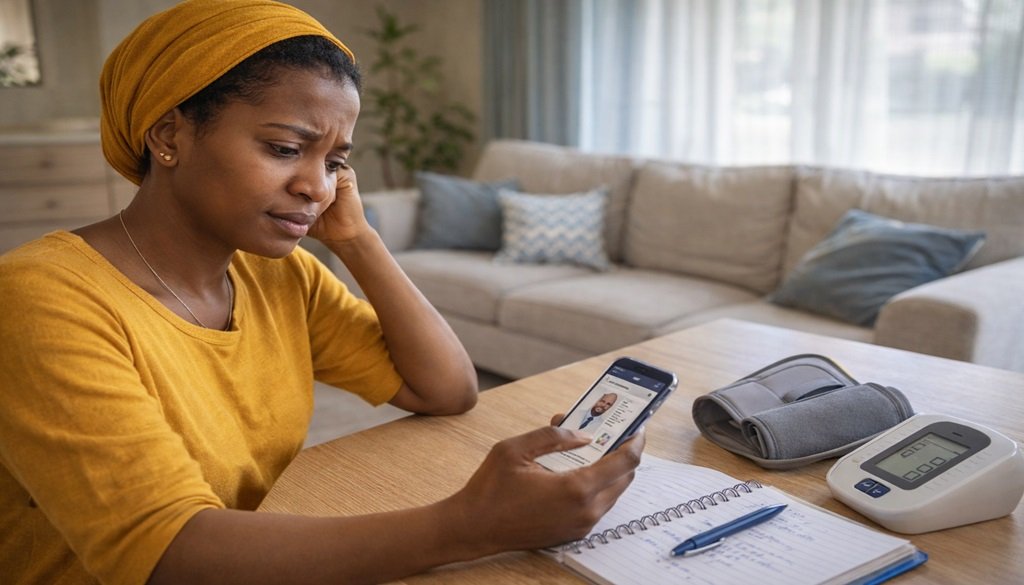
In many Nigerian homes, sickness does not start with a hospital visit. It starts with hope. Hope that the headache will pass. Hope that the fever is just stress. Hope that the drug from last time will work again. We borrow tablets from neighbors, trust roadside chemists, forward WhatsApp remedies, and pray that tomorrow will be better. These choices are rarely careless—they are born from tight finances, long hospital queues, fear of bad news, and the belief that “it’s not that serious.” Sadly, for too many Nigerians, this hope delays help until the body is already exhausted. Doctor-led health advice for Nigerians is no longer optional—it is the difference between early healing and preventable suffering. This guide was written to meet you where you are, speak your language, respect your reality, and give you medical guidance you can trust before a small problem becomes a life-threatening emergency.
Why Doctor-Led Health Advice for Nigerians Is Different from Internet Health Tips
Doctor-led health advice for Nigerians considers realities such as:
- Limited access to specialists
- High out-of-pocket healthcare costs
- Cultural beliefs around illness
- Availability of local foods and medications
According to the World Health Organization (WHO), over 70% of preventable deaths in low- and middle-income countries are linked to delayed care and poor health literacy.
“Early intervention and prevention are the most cost-effective health strategies globally.” — WHO
This is why doctor-led health advice for Nigerians focuses on prevention, early detection, and simple tracking—not fear-based medicine.
Top 10 Doctor-Led Health Advice for Nigerians
1. Stop Self-Medication
Self-medication is one of the biggest silent health threats in Nigeria.
Nigerian reality:
- Buying antibiotics without prescriptions
- Reusing old prescriptions
- Mixing herbal remedies with pharmaceuticals
Case example:
A 32-year-old trader in Onitsha treated fever repeatedly with leftover antibiotics. When he finally visited a hospital, he had severe antibiotic-resistant typhoid.
According to the Mayo Clinic, misuse of antibiotics fuels resistance and treatment failure.
“Antibiotic resistance is one of the greatest public health threats today.” — Mayo Clinic
Doctor-led health advice for Nigerians:
- Never start antibiotics without a doctor
- Complete prescribed doses
- Avoid mixing herbs and drugs without guidance
2. Check Blood Pressure Early
High blood pressure is no longer an “old people disease” in Nigeria.
Nigerian case:
A 28-year-old NYSC member collapsed in Lagos during a parade due to undiagnosed hypertension.
According to Harvard Medical School, hypertension often has no symptoms until damage occurs.
“High blood pressure is called the silent killer for a reason.” — Harvard Health
Doctor-led health advice for Nigerians:
- Check BP at least once every 3 months
- Reduce salt-heavy seasoning cubes
- Track readings at home
3. Prioritize Sleep Like Medicine
Nigeria’s hustle culture glorifies sleeplessness, but sleep deprivation damages immunity, mental health, and metabolism.
Everyday Health confirms chronic poor sleep raises the risk of hypertension and depression.
Doctor-led health advice for Nigerians:
- Target 7–8 hours nightly
- Reduce phone use after 9 pm
- Use evening prayers or journaling to unwind
4. Eat Local, Balanced Nigerian Meals
Healthy eating in Nigeria does not require imported diets.
Nigerian foods as medicine:
- Beans → heart health
- Okra → blood sugar control
- Ugwu → iron and immunity
According to Harvard T.H. Chan School of Public Health, whole foods reduce chronic disease risk.
Doctor-led health advice for Nigerians:
- Half plate vegetables
- Reduce fried snacks
- Watch portion sizes of swallow
5. Exercise Without a Gym

You do not need a gym membership to stay active.
Nigerian-friendly exercises:
- Brisk walking to mosque/church
- Home chores
- Stair climbing
According to the CDC, 30 minutes of daily activity reduces heart disease risk by 40%.
6. Manage Stress Proactively
Chronic stress fuels hypertension, ulcers, and burnout.
Nigerian stressors:
- Economic pressure
- Extended family obligations
- Urban congestion
Harvard Health links stress directly to cardiovascular disease.
Doctor-led health advice for Nigerians:
- Short daily quiet time
- Deep breathing
- Limit negative news intake
7. Doctor-Led Health Advice for Nigerians: Screen for Diabetes Early
Diabetes is rising rapidly in Nigeria, especially among people under 40.
Case study:
A 35-year-old civil servant in Kano was diagnosed with type 2 diabetes after repeated fatigue and frequent urination.
Mayo Clinic confirms early detection prevents complications.
Doctor-led health advice for Nigerians:
- Annual fasting blood sugar checks
- Reduce sugary drinks
- Track readings regularly
8. Doctor-Led Health Advice for Nigerians: Protect Liver and Kidneys
Painkiller abuse and herbal mixtures damage organs silently.
WHO warns against unregulated herbal remedies.
Doctor-led health advice for Nigerians:
- Avoid daily painkiller use
- Limit alcohol
- Drink enough clean water
9. Doctor-Led Health Advice for Nigerians: Take Women’s Health Seriously
Ignoring menstrual pain and heavy bleeding is dangerous.
Nigerian example:
Many women normalize fibroid symptoms until severe anemia occurs.
Dr. Abimbola Aina, Nigerian OB-GYN:
“Severe period pain is not normal and should be investigated.”
10. Doctor-Led Health Advice for Nigerians: Track Your Health
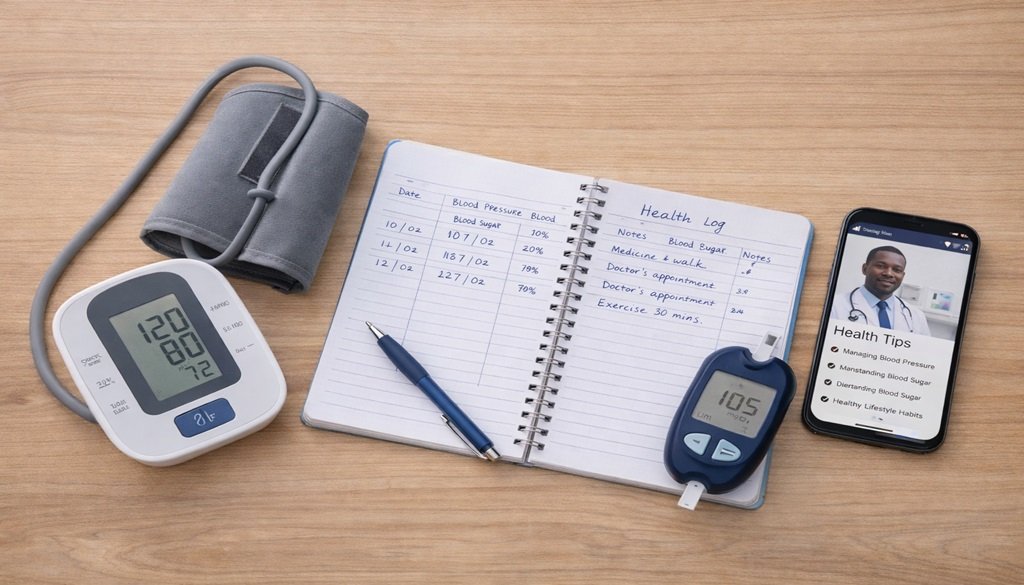
Health tracking saves lives.
What to track:
- Blood pressure
- Blood sugar
- Symptoms
According to WHO, patient self-monitoring improves outcomes significantly.
Doctor-led health advice for Nigerians strongly encourages written tracking.
Featured Snippet: Quick Summary
What is the most important doctor-led health advice for Nigerians?
Early prevention, regular health tracking, reduced self-medication, balanced local diets, and timely medical consultation.
Frequently Asked Questions
What is doctor-led health advice for Nigerians?
Doctor-led health advice for Nigerians refers to medically accurate, culturally relevant guidance tailored to Nigerian lifestyles and healthcare realities.
How often should Nigerians check their blood pressure?
At least every 3 months for adults, more frequently if diagnosed with hypertension.
Is self-medication dangerous in Nigeria?
Yes. It leads to drug resistance, delayed diagnosis, and organ damage.
Can lifestyle changes reduce hospital visits?
Yes. Preventive habits reduce hospital admissions significantly.
Final Thoughts: Why Doctor-Led Health Advice for Nigerians Saves Lives
Doctor-led health advice for Nigerians empowers individuals to take control of their health before emergencies occur. Prevention is cheaper, safer, and more sustainable than crisis care. Nigerians deserve health information that is accurate, local, and actionable.
⚠️ Download These FREE Health Tools Now (Limited Time):
- ✅ 19-Week Blood Pressure Tracker
- ✅ Blood Sugar Monitoring Sheet
- ✅ Daily Symptom Log
👉 Visit: shop@HealthsClinic.com
These resources are periodically removed. Download now before access closes.
Medical Disclaimer
This article provides general doctor-led health advice for Nigerians for educational purposes only. It does not replace professional medical consultation, diagnosis, or treatment. Always seek advice from a qualified healthcare provider regarding any medical condition.
Related Reading
- Vaccines in Nigeria: Protecting Our Children
- Get Tested for STD—Top 10 Warning Signs to Know
- Ending Polio in Nigeria: Gaps, Risks and Hope



Your words have a way of resonating deeply with your readers Thank you for always being encouraging and uplifting
Nội dung hay và thực tế. Letco là đơn vị du học Hàn Quốc giàu kinh nghiệm, đồng hành cùng học viên từ A-Z. Ghé letco.vn để được tư vấn miễn phí.
This is exactly what I needed today — much appreciated. For anyone on the market, the smartest move was consolidating the search — I landed on https://ptyt.k722863.com/. It lists local and remote roles with a search that’s genuinely fast.
Saved and shared with a friend. For job seekers, the trick was using one good board instead of ten — I landed on https://dlql.talentbay.shop/. It lists thousands of positions with updates every day. All the best.
Nice article. There’s a good follow-up resource at aiyouoxi-web-app.com if you want to dig further.