


Most Nigerians know this feeling. You wake up already tired, push through work, traffic, family demands, and financial pressure, and still promise yourself you will rest later. Later often never comes.
That is why Afro-burnout-reset ideas in Nigeria are not luxury self-care trends. They are practical survival tools for people living with long work hours, unstable systems, limited mental health support, and strong expectations to “cope.” Many Nigerians delay seeking help, self-medicate stress, or receive conflicting advice from family and social media, all while trying to stay functional.
From repeated patient patterns and lived observation, burnout is quietly becoming a public health concern. The encouraging part is that recovery does not always require expensive therapy or dramatic changes.
This guide shares Afro burnout reset ideas in Nigeria that are culturally grounded, affordable, and realistic—designed to help you regain control, protect your energy, and support lasting well-being, one steady step at a time.
What Is Burnout?
Burnout is not the same as ordinary stress or tiredness. The World Health Organization (WHO) defines burnout as “a syndrome conceptualized as resulting from chronic workplace stress that has not been successfully managed.” Read also: Traumatic Accidents & Mental Health
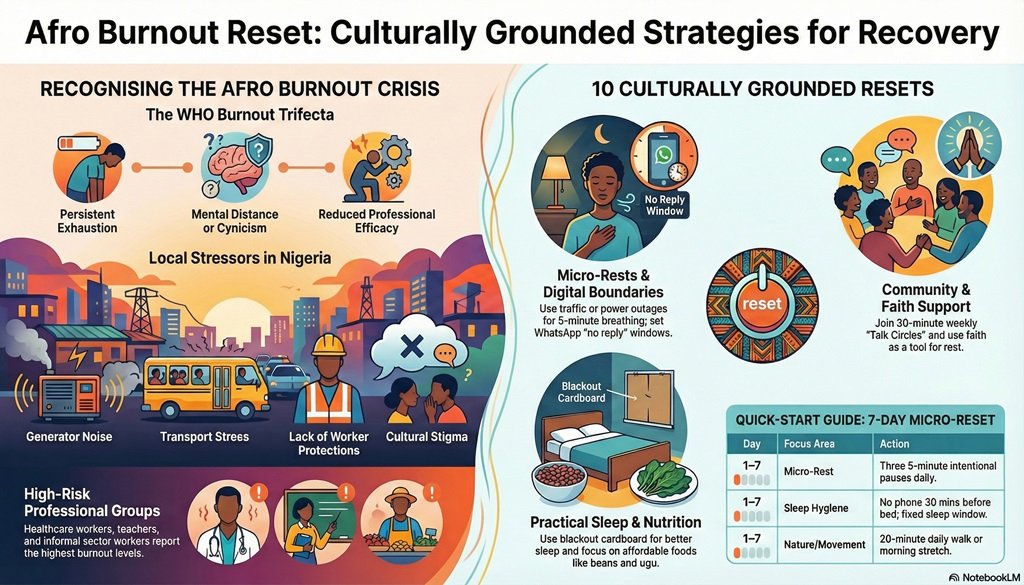
According to the WHO ICD-11 classification, burnout has three core features:
- Persistent exhaustion
- Mental distance or cynicism toward work
- Reduced professional efficacy
Burnout affects emotional health, physical health, relationships, productivity, and long-term well-being. If left unaddressed, it increases the risk of depression, anxiety disorders, cardiovascular disease, and substance misuse.
Why Afro Burnout Matters in Nigeria (and Beyond)
High Burnout, Low Support
Research shows high levels of burnout among Nigerian professionals, especially healthcare workers, teachers, and informal sector workers.
A Nigerian study published on PubMed Central reported moderate to severe burnout levels in a significant proportion of healthcare workers, driven by workload, inadequate staffing, and systemic stressors.
Structural and Cultural Pressures
Burnout in Nigeria is intensified by
- Long working hours with minimal rest
- Informal employment without worker protections
- Financial responsibilities to extended family
- Unreliable electricity, transport stress, and noise
- Cultural stigma around mental health conversations
Why Afro-Centered Solutions Matter
Many global burnout solutions assume:
- Flexible work policies
- Affordable therapy
- Stable infrastructure
Afro burnout reset ideas in Nigeria must instead focus on:
- Low-cost, high-impact interventions
- Community and faith-based support
- Workplace renegotiation within rigid systems
- Self-regulation tools that fit chaotic schedules
10 Afro Burnout Reset Ideas in Nigeria (With Remedy Plans)
1. Micro-Rest Routines for Crowded Days
One of the most effective Afro burnout reset ideas in Nigeria is micro-rest—short, structured pauses that calm the nervous system.
Why it works:
Research shows even 3–10 minutes of intentional rest reduces cortisol and improves focus.
Micro-rest actions
- 5-minute slow breathing (inhale 4 sec, exhale 6 sec)
- Seated shoulder and neck release
- Eyes-closed grounding before switching tasks
Nigerian-specific remedy plan
- Use waiting periods (traffic, queues, power outages)
- Set phone alarms labeled “Pause, don’t push.”
- Treat prayer breaks or tea breaks as recovery time
2. Community Talk Circles and Peer Support
Burnout thrives in isolation. Healing accelerates in safe community spaces. Community-based support is a powerful Afro burnout reset idea in Nigeria because it:
- Reduces stigma
- Normalizes emotional expression
- Costs little or nothing
How to create a talk circle
- 6–10 trusted people
- 30–45 minutes weekly or bi-weekly
- One shared prompt (e.g., “What drained me this week? ”)
Ground rules
- No fixing, only listening
- Confidentiality
- Optional participation
Remedy plan
- Rotate facilitators
- End sessions with grounding or prayer
3. Practical Sleep Hygiene for Nigerian Homes
Sleep deprivation is a hidden driver of burnout.
Common Nigerian barriers
- Generator noise
- Heat and poor ventilation
- Shift work and multiple jobs
Sleep reset strategies
- Fixed sleep window (even if short)
- 20–30 minute power naps
- Caffeine cutoff by 2–3 pm
Low-cost sleep hacks
- Earplugs or white-noise apps
- Dark cloth or cardboard blackout
- Evening wind-down routine (no phone last 30 minutes)
4. Nutrition and movement directly influence stress hormones.

Affordable mood-supporting foods
- Beans and lentils
- Leafy vegetables (ugu, spinach)
- Fish and eggs
- Water and electrolytes
- 10-minute morning stretch
- Market walking circuits
- Stair climbing
7-day reset plan
- Hydrate on waking
- One vegetable-heavy meal daily
- 10–15 minutes of movement
5. Digital Detox and WhatsApp Boundaries
Constant notifications fuel burnout.
One of the most practical Afro burnout reset ideas in Nigeria is setting clear digital boundaries, especially on WhatsApp.
Boundary tools
- “No reply after 8 pm” auto-message
- Work group mute outside office hours
- Separate personal and work chats
Sample boundary message
“To improve focus and health, I respond to work messages between 8am and 6pm. Urgent matters can be flagged.”
6. Low-Cost CBT and Problem-Solving Templates
Cognitive Behavioral Therapy (CBT) techniques are effective and adaptable.
A systematic review published in Mental Health Science found CBT-based workplace interventions significantly reduced burnout symptoms.
Simple CBT steps
- Identify the stressor
- Challenge unhelpful thoughts
- Test one small change
- Review weekly
Nigerian adaptation
- Focus on practical constraints
- Use pen-and-paper worksheets
- Pair with peer accountability
7. Faith-Informed Coping Without Stigma
Faith is a major source of resilience in Nigeria. When used responsibly, it becomes a powerful Afro burnout reset idea in Nigeria.
Healthy faith-based coping
- Emotional honesty in prayer
- Faith leaders normalizing mental health care
- Referrals to clinics when needed
What to avoid
- “Just pray harder” messaging
- Shaming or spiritualizing exhaustion
Remedy plan
- Short mental health orientation for faith leaders
- Sermon messages that validate rest
- Faith-clinic referral partnerships
8. Workplace Renegotiation Scripts
Burnout is not only personal—it is structural.
Key renegotiation areas
- Task prioritization
- Flexible deadlines
- Rotational duties
Manager brief template
- Describe workload impact
- Propose one realistic change
- Offer review timeline (30 days)
Why this works
WHO emphasizes burnout requires organizational solutions, not just individual coping.
9. Nature Prescriptions (Low-Cost Outdoor Reset)
Time in nature reduces stress hormones and improves mood.
Urban Nigerian options
- Park walks
- Lagoon or riverside strolls
- Early-morning neighborhood walks
14-day nature reset
- 20 minutes outdoors daily
- No phone for first 10 minutes
- Slow walking and breathing
10. Crisis Response and Local Resource Planning
Burnout can escalate into crisis.
Every adult should have a simple plan
- Emergency contacts
- Trusted support person
- Nearest clinic or helpline
When to seek urgent help
- Thoughts of self-harm
- Severe insomnia
- Inability to function
Remedy plan
- Write a one-page crisis card
- Share with one trusted person
- Keep accessible at all times
Afro Burnout Recovery Remedy Plans (Program Bundles)
1. 7-Day Micro-Reset
- Daily micro-rest
- Sleep hygiene basics
- 20-minute nature walks
2. Workplace Rebuild Plan
- CBT worksheet
- Manager renegotiation script
- Weekly workload review
3. Community Healing Kit
- Talk circle guide
- Faith leader mental health script
- Referral map
Expert Opinions and Evidence
The WHO emphasizes that burnout is an occupational phenomenon requiring systemic change, not individual blame.
Nigerian studies confirm high burnout prevalence linked to workload and limited mental health access.
Global evidence supports CBT-based and workplace-level interventions for burnout reduction.
FAQs
What are the fastest Afro burnout reset ideas in Nigeria?
Micro-rest routines, WhatsApp boundaries, short outdoor walks, and sleep hygiene changes.
How long does burnout recovery take?
Small improvements may appear within days, but sustainable recovery often takes 2–6 weeks with structural changes.
Are these strategies evidence-based?
Yes. Many are supported by WHO guidance and peer-reviewed research.
When should I see a professional?
If symptoms are severe, persistent, or involve self-harm thoughts.
Can faith leaders really help?
Yes—when they reduce stigma and support referrals, not replace care.
Is burnout only work-related?
Work is a major trigger, but financial, caregiving, and systemic stressors also contribute.
Final Thoughts
Afro burnout reset ideas in Nigeria are about reclaiming energy, dignity, and balance in demanding environments. Recovery is not weakness—it is strategy. By combining micro-rests, community care, practical CBT tools, workplace advocacy, and cultural strengths, sustainable healing becomes possible. Start with one small reset today.
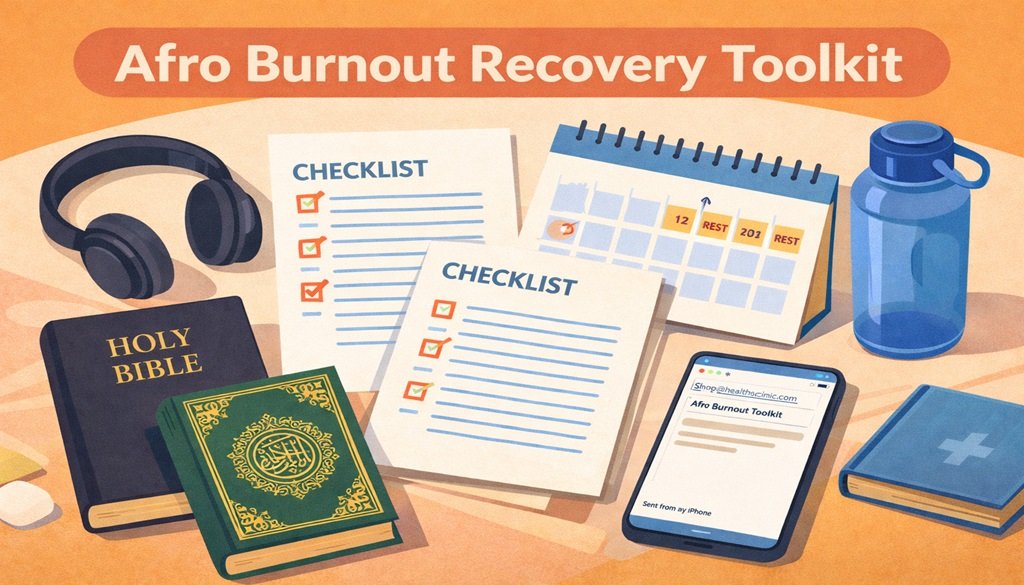
📥 Get your FREE Afro Burnout Reset Resources at shop@healthsclinic.com
Includes:
- 7-day burnout reset plan
- CBT worksheets
- WhatsApp boundary templates
- Community talk-circle guide
Medical Disclaimer
This article is for educational purposes only and does not replace professional medical or mental health advice. If you experience severe symptoms, suicidal thoughts, or functional impairment, seek care from a qualified healthcare provider immediately.
Related Reading
- Mindfulness in Everyday Life: A Practical Guide
- Benefits of Good Sleep for Mental Health
- Improve Sleep Naturally: Beat Insomnia Without Pills