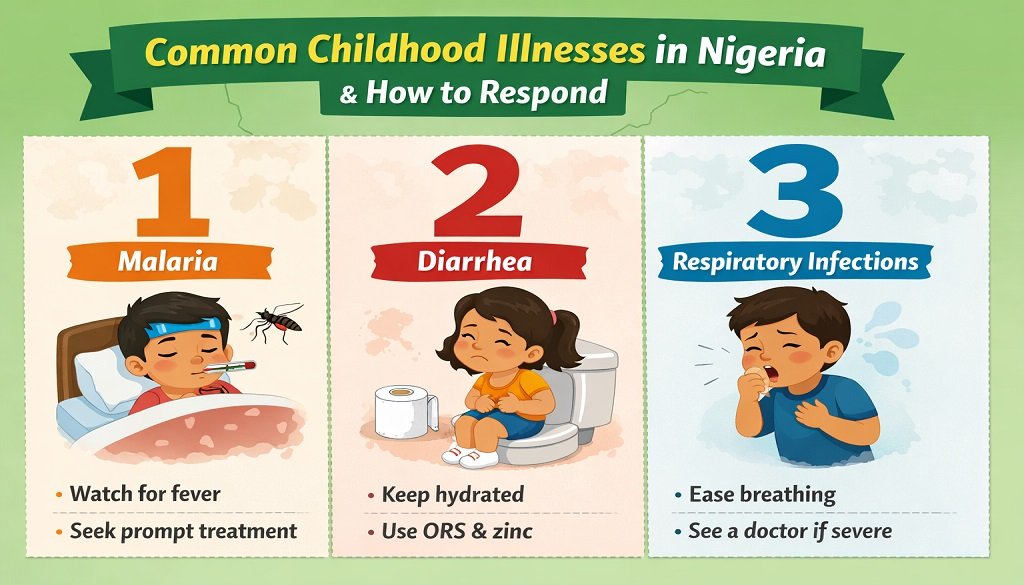
In many Nigerian homes, childhood illness is a familiar part of growing up. A child develops fever, cough, diarrhea, or vomiting, and parents do their best—home remedies, advice from relatives, medicines from the pharmacy—hoping the symptoms will pass. Most times they do, but sometimes delays or the wrong response allow a simple illness to become serious.
Common childhood illnesses in Nigeria remain a major concern for parents, caregivers, and health workers. Many of these illnesses are preventable or easily manageable when recognized early. However, infections, environmental exposure, nutrition challenges, and limited access to timely healthcare mean that children can fall sick more often and recover more slowly than they should.
From everyday clinical experience, fear and uncertainty often make situations worse. Parents may not know which symptoms are mild, which are warning signs, or when home care is no longer enough. Delayed recognition and inappropriate treatment are key reasons outcomes become poor.
This article explains common childhood illnesses in Nigeria, how to recognize early symptoms, practical steps parents can take at home, and clear signs that medical care is needed. The goal is to provide calm, reliable guidance that empowers parents, reduces fear, and supports healthier childhood outcomes.
Common Childhood Illnesses in Nigeria
Children’s immune systems are still developing, making them more vulnerable to infections. In Nigeria, factors such as overcrowding, sanitation challenges, malaria exposure, and gaps in vaccination coverage increase the risk of childhood illnesses.
Understanding the most common conditions helps parents respond quickly and appropriately.
Fever and Febrile Illnesses in Children
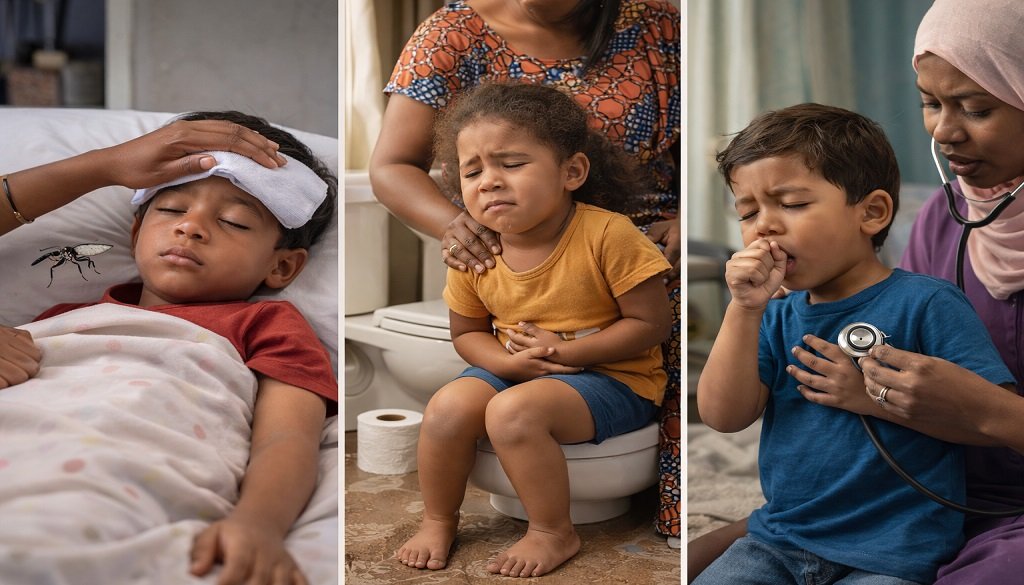
Fever is one of the most common reasons parents seek medical care for children. Fever itself is not a disease but a sign that the body is responding to infection or inflammation.
In Nigerian children, fever commonly results from viral infections, malaria, bacterial infections, and post-immunization responses.
Parents should monitor temperature, feeding and fluid intake, activity level, and other symptoms such as vomiting or rash.
“Fever is a common symptom in children and often signals infection rather than disease itself.” World Health Organization (WHO)
A fever that lasts more than two days, becomes very high, or is accompanied by convulsions or unusual sleepiness requires medical evaluation.
Malaria in Children
Malaria remains one of the leading causes of childhood illness and death in Nigeria. Children under five years are particularly vulnerable due to lower immunity.
Common symptoms include fever, chills, weakness, loss of appetite, vomiting, headache, and convulsions in severe cases.
Early testing and prompt treatment significantly reduce complications.
The Nigerian Centre for Disease Control (NCDC) emphasizes early diagnosis and treatment to prevent severe malaria in children.
Preventive measures such as insecticide-treated nets, environmental sanitation, and early care-seeking remain essential.
Respiratory Infections in Children
Respiratory infections are among the most common childhood illnesses in Nigeria. These include coughs, colds, bronchitis, and pneumonia.
Risk factors include poor ventilation, exposure to smoke from cooking fuels, overcrowding, and viral spread.
Warning signs that need urgent care include fast breathing, chest indrawing, bluish lips or nails, and persistent cough with fever.
“Pneumonia is a leading cause of death in children under five, but it is preventable and treatable.” UNICEF.
Early treatment greatly improves outcomes.
Diarrheal Diseases in Children
Diarrheal diseases remain a major cause of illness and dehydration among Nigerian children, particularly in areas with unsafe water and poor sanitation.
The greatest danger is dehydration. Parents should watch for dry mouth, reduced urination, sunken eyes, and unusual weakness.
“Most deaths from diarrheal diseases are preventable through simple interventions like oral rehydration therapy.”
World Health Organization (WHO)
Oral rehydration solution (ORS) should be started early.
Skin Infections and Rashes
Skin infections are common due to heat, humidity, insect bites, and hygiene challenges. Conditions include fungal infections, impetigo, scabies, and allergic rashes.
Signs of infection include redness, swelling, pain, pus, or fever. Hygiene and early care help prevent complications.
How Parents Should Respond to Childhood Illnesses
Parental response plays a critical role in recovery. Calm observation, timely action, and avoidance of harmful practices protect children’s health.
Parents should avoid unnecessary antibiotics, unverified herbal remedies, and delayed hospital visits when symptoms worsen.
Home Care and First Response
For mild illnesses, parents can support recovery by ensuring adequate fluids, nutritious meals, sufficient rest, and close monitoring of symptoms.
When to Seek Medical Attention
Immediate medical care is needed if a child has a persistent high fever, difficulty breathing, convulsions, severe diarrhea or vomiting, poor feeding, or unusual drowsiness.
Why Early Care Matters for Child Health in Nigeria
Delayed care increases complications and healthcare costs. Early care prevents disease progression, improves survival, and supports healthy growth.
The Federal Ministry of Health Nigeria emphasizes early care-seeking as a cornerstone of child survival strategies.
Preventing Common Childhood Illnesses

Prevention remains the most effective approach. Routine immunization, safe water, sanitation, handwashing, mosquito-net use, and balanced nutrition significantly reduce illness burden.
Common Myths About Childhood Illnesses in Nigeria
- All fevers are malaria. Fever has many causes and requires proper assessment.
- Antibiotics cure every illness. Antibiotics do not treat viral infections.
- Hospital care should be a last resort. Early care improves outcomes.
Correct information saves lives.
Frequently Asked Questions
What are the most common childhood illnesses in Nigeria?
Fever-related illnesses, malaria, respiratory infections, diarrheal diseases, and skin infections are most common.
When should a child with a fever see a doctor?
If a fever lasts more than two days, becomes very high, or is associated with convulsions or lethargy.
Is malaria still common among Nigerian children?
Yes. Malaria remains a major cause of illness, especially in children under five.
How can parents prevent childhood infections?
Immunization, hygiene, safe water, proper nutrition, and early care-seeking reduce infection risk.
What signs show a child needs urgent medical care?
Difficulty breathing, convulsions, dehydration, persistent vomiting, or extreme weakness.
Final Thoughts
Common childhood illnesses in Nigeria are part of early life, but severe outcomes are preventable. Awareness, early recognition, and appropriate response protect children’s health.
Seeking care early is responsible parenting and a vital step toward healthier Nigerian children.
This post is for education only and is not intended as a substitute for professional medical guidance.
Related Reading
- Common Women’s Health Disorders in Nigeria Explained
- Get Tested for STD—Top 10 Warning Signs to Know
- Best Period and Ovulation Tracker App for Android


Pingback: Top 20 Common Allergic Disorders in Nigeria
Pingback: Ending Polio in Nigeria: Gaps, Risks and Hope