
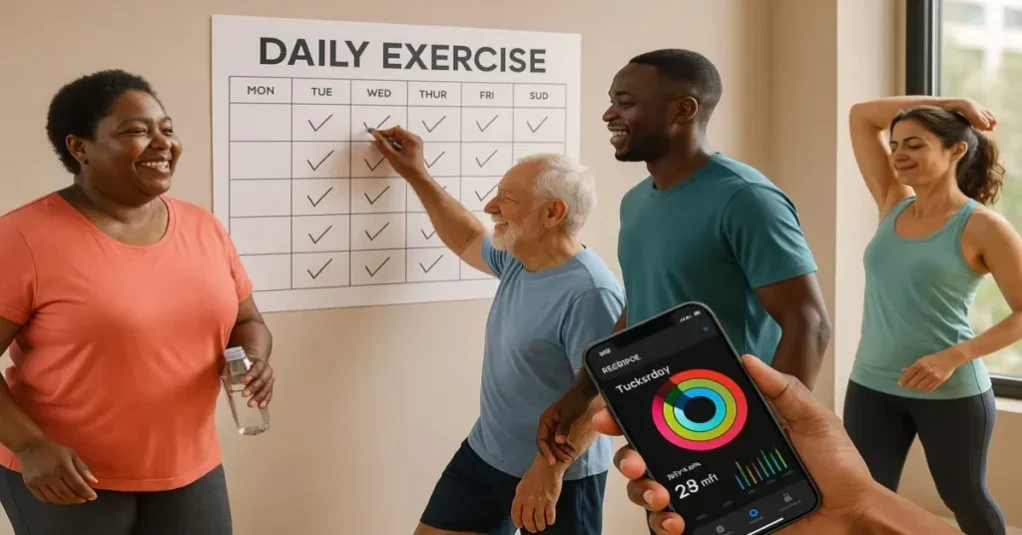
For many people, starting an exercise routine feels easy at first. You feel motivated, make plans, and promise yourself to stay consistent. A few weeks later, life gets busy, routines slip, and workouts become irregular. It often feels like a motivation problem, but in reality, something more practical is missing.
Daily exercise tracking helps bridge the gap between intention and consistency. By simply recording what you do each day, exercise stops being a vague goal and becomes a visible habit. You begin to notice patterns—what works, what doesn’t, and how small efforts add up over time. This awareness alone can make a powerful difference.
From everyday experience and research, people who track their activity are more likely to stay consistent, build healthier routines, and feel more in control of their progress. Tracking turns effort into evidence and progress into something you can actually see.
At HealthsClinic.com, we believe awareness is the first step toward lasting change. Whether you use a fitness app or a simple printable or fillable tracker, daily exercise tracking can transform how you approach movement—helping you stay accountable, build better habits, and enjoy your fitness journey with calm confidence.
What Is Daily Exercise Tracking?
Daily exercise tracking means recording your physical activities every day, such as type, duration, and intensity—so you can measure progress over time. You can use a journal, an app, or a wearable device. The key is to make your actions visible.
According to the University of Rochester Medical Center, keeping a training log “helps you organize and save information about your exercise routine so you can work toward a specific goal.” (Source)
Why Daily Exercise Tracking Matters
When you track daily exercise, you don’t just record activity; you, in fact, build awareness. You notice patterns, celebrate small wins, and stay motivated longer. Over time, tracking becomes your personal coach, helping you improve without guesswork.
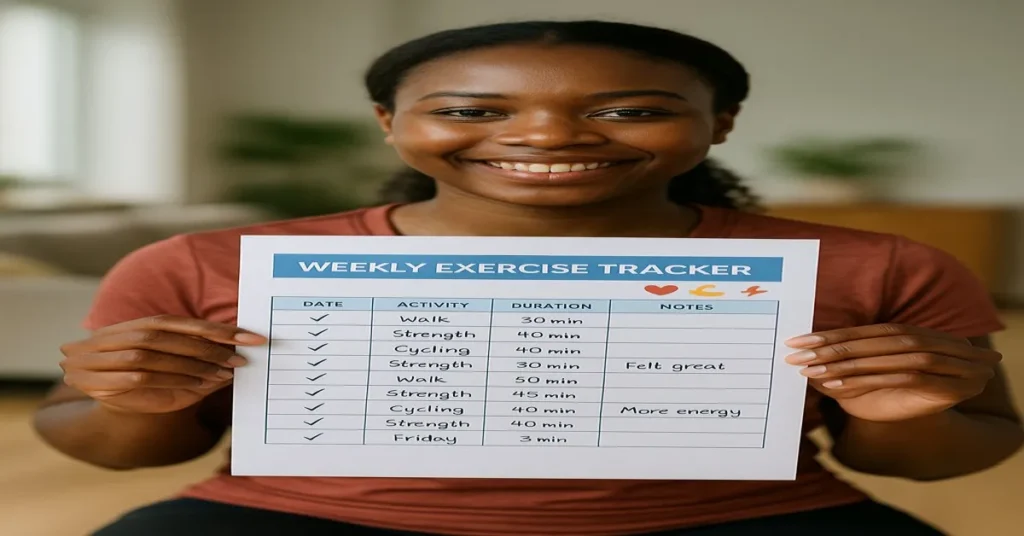
The Science Behind Daily Exercise Tracking
How Daily Exercise Tracking Builds Habits
Behavioral science shows that self-monitoring is one of the most powerful habit-forming tools. Each time you log an activity, you reinforce commitment. A 2022 review of 121 studies found that self-tracking increased exercise frequency and overall activity levels. (PMC Research)
Motivation Through Progress
Tracking creates visible proof of improvement. The human brain responds positively to progress; even small wins release dopamine, boosting motivation to continue.
Expert Insight on Daily Exercise Tracking
“Fitness trackers are a great tool for heart health… Tracking helps many people when combined with a clear goal,” says Dr. Seth Martin, cardiologist at Johns Hopkins Medicine. (Hopkins Medicine)
In other words, tracking turns invisible progress into something you can see and celebrate.
The Health Benefits of Daily Exercise Tracking
Daily Exercise Tracking Improves Motivation and Consistency
When you see your workouts written down, it builds accountability. You begin to notice how skipping one day affects your energy or mood. Logging three active days in a row gives you momentum.
Boosts Energy and Mental Wellbeing
Tracking reveals the connection between movement and mood. On days when you’re active, you may feel more energetic and focused. Over time, this awareness encourages regular exercise, which science links to reduced stress and anxiety.
Daily Exercise Tracking Helps with Weight and Muscle Management
Recording your workouts helps you balance effort and recovery. Studies show that people who track both exercise and nutrition achieve better results than those who rely on memory. (PubMed)
Supports Heart and Metabolic Health
Tracking highlights sedentary patterns and reminds you to move. Regularly monitored activity reduces the risk of hypertension, diabetes, and heart disease. The World Health Organization (WHO) recommends at least 150 minutes of moderate activity weekly—a goal made easier when you’re tracking progress. (WHO Guidelines)
How to Start Tracking Your Exercise Effectively
Pick a Tracking Method
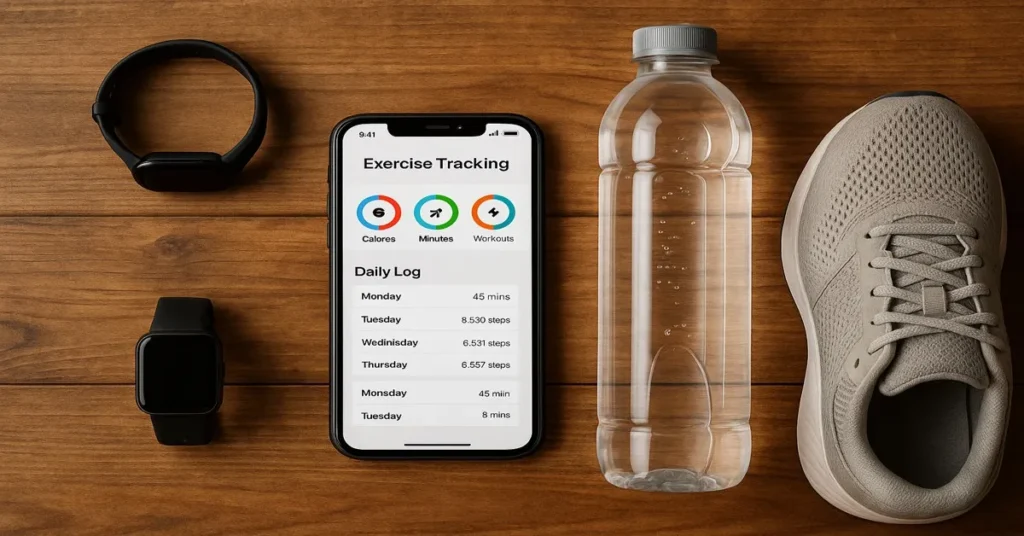
- Digital Apps: Google Fit, MyFitnessPal, or Fitbit sync automatically with your phone or watch.
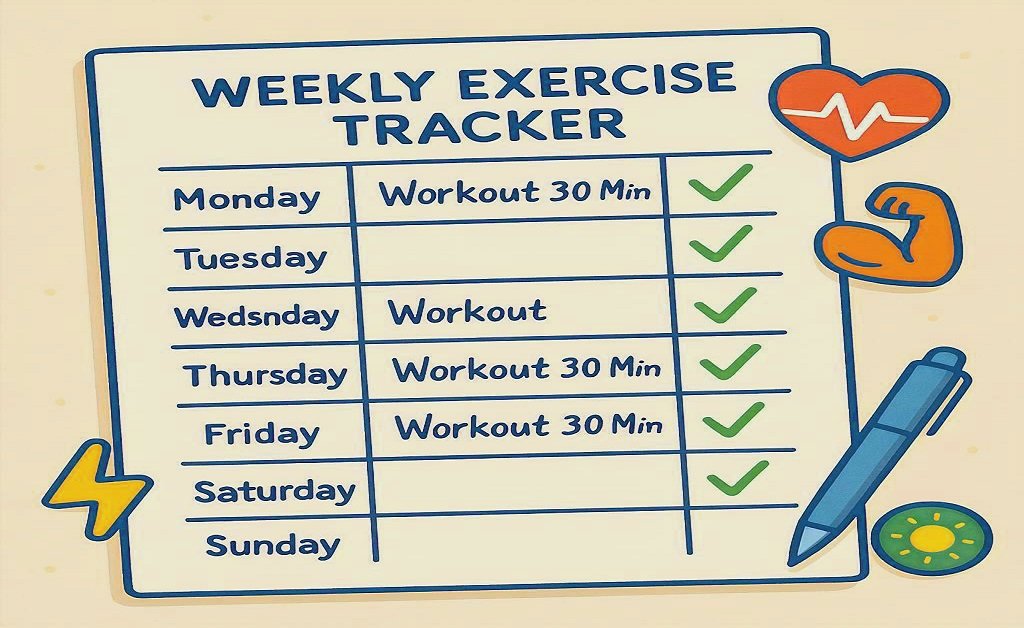
- Printable Trackers: Use HealthsClinic’s free Daily Exercise Tracker PDF to log workouts manually. It’s ideal if you prefer pen and paper or have limited internet access.
Set Measurable Goals
Use the SMART approach—specific, measurable, achievable, relevant, and time-bound. Example: “Walk briskly for 30 minutes daily for 21 days.” Read also: How To Set Smart Health GoalsRecord Key Details Daily
Track:- Date & time of workout
- Activity type (e.g., jogging, dance, yoga)
- Duration & intensity
- Mood or energy level after exercise
Review Weekly
At the end of each week, look for patterns: What times did you exercise most? Which workouts gave you energy? Adjust your plan for the next week.Stay Consistent
Tracking only works if you do it regularly. Habit builds when effort meets consistency.
Common Mistakes to Avoid in Daily Exercise Tracking
Overtracking or Obsessing
Don’t turn your tracker into a source of stress. Focus on patterns, not perfection.
Inconsistent Entries During Daily Exercise Tracking
Missed logs break the feedback loop. Set daily reminders to update your tracker right after each session.
Ignoring Rest and Recovery
Logging rest days is as vital as logging workouts. It helps you prevent burnout and maintain balance.
Comparing with Others
Your journey is unique. Use tracking to improve against your past self, not someone else’s record.
Real-Life Example: Small Steps, Big Change
Chidinma, a 34-year-old nurse in Abuja, started walking 20 minutes every morning and used the HealthClinic Daily Exercise Tracker to mark each day. Within six weeks, she reported better sleep, more stable energy, and reduced back pain.
Her story shows what research already proves: that tracking leads to transformation because it keeps you conscious, consistent, and encouraged.
Top Tools and Apps for Easy Tracking
Digital Options For Daily Exercise Tracking
- Fitbit / Garmin / Apple Health: Automatically record steps, heart rate, and calories.
- Google Fit: Integrates with most Android phones.
- MyFitnessPal: Combines workout logs with nutrition tracking. Also read: Best Period & Ovulation Tracker
Offline Options
- HealthsClinic Printable Tracker: Best for low-data users or those who love physical logs.
- Simple Notebook: Old-school but effective; pen and paper still work.
Choose the system you’ll actually use. Consistency matters more than the technology.
Building a Sustainable Habit
When you track exercise daily, you build self-discipline and awareness. Over time, the habit sticks. A week becomes a month; a month becomes a lifestyle.
Tracking gives feedback that helps you make smarter decisions, including when to push harder or rest, when to try new routines, and when to celebrate progress. It’s how you move from motivation to mastery.
“It’s not about being extreme; it’s about being consistent.” — Joe Wicks, Fitness Coach & Author
At HealthsClinic.com, we encourage readers to combine data with self-care. Don’t just move; measure your growth and celebrate every step.

FAQs on Daily Exercise Tracking
- What counts as exercise when tracking daily?
Any activity that raises your heart rate counts—walking, dancing, home workouts, or sports. - Do I need a smartwatch to track?
A printable tracker or phone note is enough. The method doesn’t matter; consistency does. - How often should I review my log?
Weekly reviews help you see progress, catch trends, and adjust your plan. - What if I miss days?
Simply restart. Use the gap as insight into what interrupted your flow and plan better next week. - Does tracking guarantee weight loss?
No, but it increases awareness, which leads to better decisions and more consistent results. - Can tracking help mental health?
Exercise releases endorphins, and seeing your progress can lift mood and reduce anxiety. - What’s best for people with limited data in Nigeria?
Download and print the free HealthsClinic Daily Exercise Tracker PDF for an offline solution.
Final Thoughts
Daily exercise tracking is more than a fitness trend; it’s indeed a mindset shift. It helps you stay aware, disciplined, and intentional about your health. The act of writing or logging every workout turns your routine into a story of progress.
Start today with a simple tracker, whether digital or printable, and commit to one week of consistent logging. Watch how your body, mood, and motivation respond.
At HealthsClinic.com, we believe your wellness journey starts with awareness. So grab your free tracker, take the first step, and let daily exercise tracking transform your health—one day at a time.
Download your free digitally fillable/printable exercise tracker from Healthsclinic.com/shop today!
This post is only for education and is not intended to replace medical consultation.
Kindly subscribe, like, and share this post.
Related Reading
- The Best Diet For Weight Loss And Muscle Gain
- How to Exercise Without a Gym: 10 Fun Ideas
- The Lifeline of Hydration: Drinking More Water Daily




Pingback: 20 Natural Ways to Sharpen Your Eyesight