

For many people, eating well often feels complicated—counting calories, avoiding long lists of foods, or following rigid rules that are hard to sustain. Yet some of the healthiest populations in the world have thrived not on strict diets, but on simple, balanced ways of eating passed down through everyday life.
A Mediterranean meal plan is not a short-term diet or a trend. It is a flexible eating pattern built around vegetables, fruits, whole grains, legumes, nuts, seeds, and healthy fats—especially olive oil—along with mindful portions and regular movement. Over decades, research has consistently shown that people who follow a Mediterranean-style diet have lower risks of heart disease, stroke, type 2 diabetes, and premature death compared with those eating typical Western diets.
What makes this approach especially appealing is its adaptability. The core principles can be applied using foods familiar in Nigeria, across Africa, and around the world, without expensive or foreign ingredients. It emphasizes enjoyment, variety, and long-term habits rather than restriction.
This simple guide explains how a Mediterranean meal plan supports better health and then provides practical 28-day sample plans tailored for Nigerians, a wider African audience, and a global readership—so you can put these proven principles into practice in real, everyday life.
What is a Mediterranean Meal Plan?
Key principles and food groups
A Mediterranean meal plan focuses on everyday foods that are minimally processed and rich in fibre, antioxidants and healthy fats. Core features include:pmc.ncbi.nlm.nih+1
- Plenty of vegetables and fruits every day (e.g., tomatoes, leafy greens, peppers, onions, citrus, berries).mayoclinic+1
- Whole grains such as whole‑wheat, oats, barley, brown rice and traditional grains.pmc.ncbi.nlm.nih+1
- Legumes: beans, lentils, chickpeas, peas as major protein sources several times per week.pmc.ncbi.nlm.nih+1
- Nuts and seeds: almonds, walnuts, groundnuts, sunflower seeds in small daily portions.pmc.ncbi.nlm.nih+1
- Olive oil (or similar unsaturated oils) as the main added fat instead of butter or palm oil.mayoclinic+1
- Moderate fish and seafood, some poultry, eggs and yoghurt or cheese.mayoclinic
- Very limited red and processed meats, sugary drinks, sweets and refined snacks.pmc.ncbi.nlm.nih+1
Health benefits backed by science
Multiple large studies and trials have linked Mediterranean‑style eating to better cardiovascular outcomes.ahajournals+2
- A major analysis in New England Journal of Medicine and follow‑up work showed that people assigned to a Mediterranean diet enriched with extra‑virgin olive oil or nuts had fewer heart attacks, strokes and cardiovascular deaths than those on a low‑fat diet.pmc.ncbi.nlm.nih+1
- Reviews in Circulation Research conclude that evidence is “large, strong and consistent” that higher adherence to the Mediterranean diet reduces cardiovascular disease and improves overall survival.sciencedirect+1
- Trials like CORDIOPREV indicate that long‑term Mediterranean eating can slow progression of atherosclerosis in people with existing coronary heart disease.ahajournals
These patterns also support weight management, better blood sugar control and lower blood pressure, making a Mediterranean meal plan a powerful lifestyle tool.pubmed.ncbi.nlm.nih+1
Mediterranean Meal Plan Basics
Daily and weekly structure
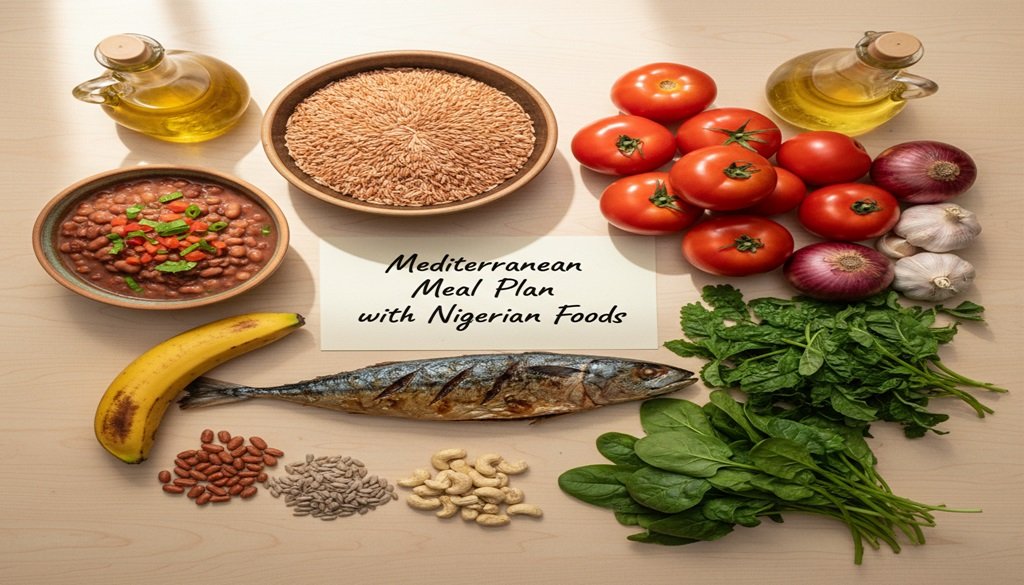
A Mediterranean meal plan does not require strict calorie counting for most people; it centres on patterns.pmc.ncbi.nlm.nih+1
Daily:
- Base meals on vegetables, whole grains or legumes.
- Use healthy fats (olive oil or similar) instead of deep‑fried options.
- Include fruits and nuts for snacks instead of sugary treats.
Weekly:
- Fish/seafood: at least 2–3 times per week.
- Legumes: 3+ times per week (beans, lentils, chickpeas).
- Poultry/eggs: a few times per week.
- Red/processed meat and sweets: occasionally, not daily.pmc.ncbi.nlm.nih+1
Pantry staples and substitutions
Key Mediterranean staples include olive oil, tomatoes, onions, garlic, leafy greens, beans, lentils, chickpeas, whole‑grain bread or pasta, nuts and yoghurt. Where extra‑virgin olive oil is expensive or hard to find, people can still follow Mediterranean principles using locally available unsaturated oils such as canola, sunflower or moderate amounts of groundnut oil instead of solid fats.pmc.ncbi.nlm.nih+2
The same principle applies to grains: if classic Mediterranean barley or farro are not available, brown rice, whole‑wheat options, millet or sorghum can be used to maintain whole‑grain intake.pmc.ncbi.nlm.nih+1
Mediterranean Meal Plan for Nigeria
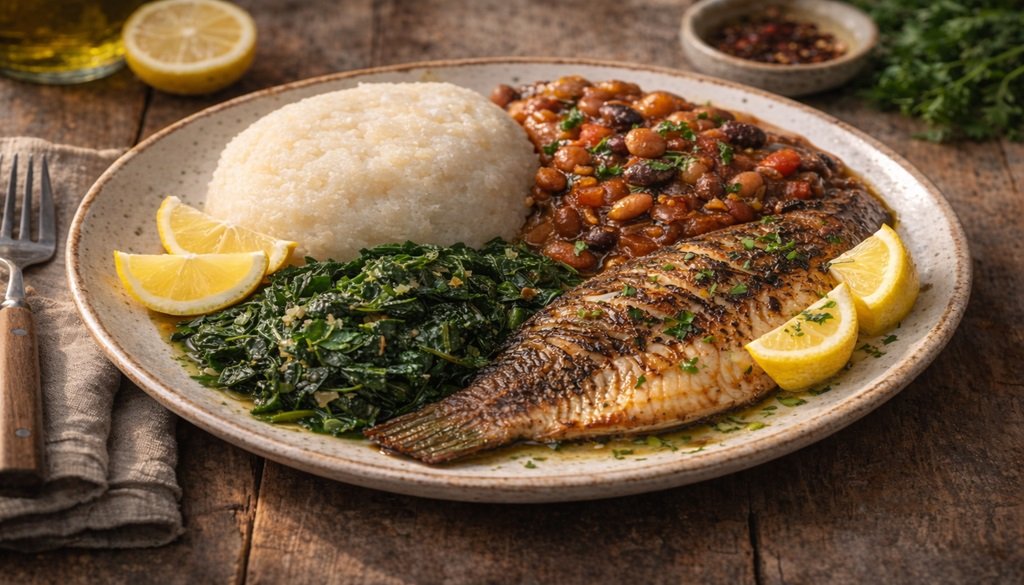
Adapting a Mediterranean meal plan for Nigerians means using local foods like beans, yams, plantain, local greens and fish, while moderating palm oil and fried snacks.pmc.ncbi.nlm.nih+1
Nigerian‑friendly Mediterranean ideas
- Breakfasts: oat porridge with bananas and groundnuts; whole‑wheat bread with boiled egg, sliced tomatoes and cucumber; moin‑moin with tomato and pepper sauce and fruit on the side.pmc.ncbi.nlm.nih
- Lunches: brown or ofada rice with beans and vegetable stew; efo riro loaded with ugu or spinach and moderate fish, cooked with more vegetable oil and less palm oil; grilled or oven‑baked fish with yam and vegetable salad.pmc.ncbi.nlm.nih+1
- Dinners/snacks: bean porridge loaded with vegetables; okra or ogbono with more greens and less red meat; roasted groundnuts, fresh fruit, unsweetened yoghurt.pmc.ncbi.nlm.nih
Sample 28‑day Mediterranean meal plan – Nigeria
This is a pattern, not a rigid prescription; portions should match individual energy needs. Days can be mixed and matched.
Weeks 1–4: repeating weekly structure
Breakfast options (rotate daily)
- Oats cooked with water or low‑fat milk, topped with banana and crushed groundnuts.
- Whole‑wheat bread with boiled egg, sliced tomato, cucumber and a drizzle of oil‑based spread.
- Moin‑moin with a side of fresh fruit (orange, pawpaw).
- Bean cake (akara) shallow‑fried in vegetable oil, served with vegetable salad.
- Plain unsweetened yoghurt with chopped fruit and a small handful of nuts.
Lunch options
- Brown/ofada rice with beans and tomato‑pepper stew rich in onions, tomatoes and moderate vegetable oil, plus grilled fish.
- Efo riro with lots of greens (ugu/spinach), beans or a small portion of chicken, served with a modest portion of boiled yam.
- Jollof brown rice with mixed vegetables and grilled or oven‑baked fish (not deep‑fried).
- Boiled plantain with bean stew and vegetable side.
- Okra and tomato stew dense with vegetables, served with a small portion of whole‑grain swallow (e.g., whole‑wheat or sorghum‑based) and fish.
Dinner options
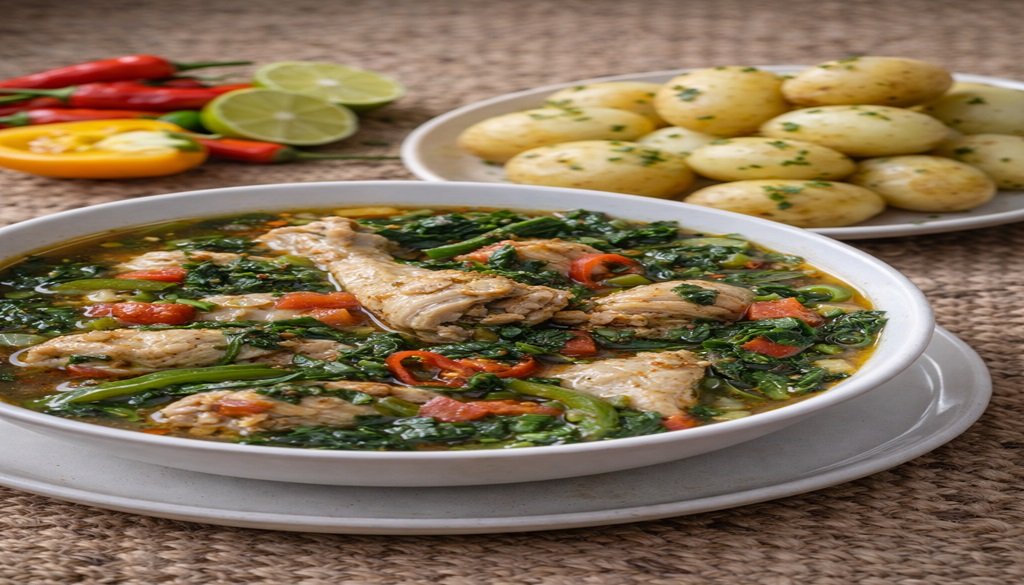
- Bean porridge with carrots, spinach and a teaspoon of oil, served with sliced cucumber.
- Vegetable‑rich pepper soup with fish or chicken, plus small boiled potatoes or plantain.
- Salad bowl: lettuce or local greens, cabbage, tomato, cucumber, beans and a small portion of tuna or sardine, drizzled with oil‑based dressing.
- Leftover efo or vegetable stew over a small serving of brown rice.
Snacks (1–2 per day)
- Fresh fruits (orange, watermelon, pawpaw, banana).
- Roasted groundnuts or cashews (small handful).
- Unsweetened yoghurt.
The same 7‑day pattern can repeat for four weeks, with variations in vegetables, fish type and fruit to keep it interesting while maintaining Mediterranean meal plan principles in a Nigerian context.pmc.ncbi.nlm.nih+1
Mediterranean Meal Plan for Africa
Aligning Mediterranean and traditional African diets
Traditional African diets often share Mediterranean characteristics: they are rich in whole grains, legumes, vegetables and modest amounts of animal protein, which can be leveraged to create African‑adapted Mediterranean plans. Examples include maize or millet porridges, bean stews, leafy greens like sukuma wiki or morogo, and fish in coastal regions.pmc.ncbi.nlm.nih+1
Replacing heavy deep‑fried foods and highly processed snacks with boiled, grilled or stewed dishes and increasing vegetables aligns many African meals with Mediterranean goals.pmc.ncbi.nlm.nih+1
Sample 28‑day Mediterranean meal plan – Africa (pan‑African style)
Again, this is a weekly pattern to repeat for four weeks, with regional variations.
Breakfast options (rotate)
- Millet or sorghum porridge topped with nuts and fruit.
- Whole‑grain pap or maize meal with beans and sautéed greens.
- Chapati or whole‑wheat flatbread with eggs and tomato‑onion relish (East Africa).
- Whole‑grain bread with avocado slices and tomatoes.
Lunch options
- Ugali (maize meal) with sukuma wiki (collard greens) and grilled tilapia (East Africa).
- Sadza or pap with bean stew and mixed vegetables (Southern Africa).
- Rice and black‑eyed peas with tomato‑vegetable stew and a small portion of chicken.
- Couscous (preferably whole‑grain) with chickpeas, vegetables and a drizzle of olive or sunflower oil (North/West Africa).
Dinner options
- Vegetable and lentil stew served with small portion of whole‑grain bread or brown rice.
- Boiled or baked sweet potato with bean stew and greens.
- Okra and tomato stew with fish and small portion of fufu made from plantain or cassava, balanced with abundant vegetables.
- Mixed vegetable soup with beans and small cornmeal dumplings.
Snacks
- Fresh seasonal fruits (mango, orange, guava, berries where available).
- Small portions of nuts or seeds (groundnuts, sunflower seeds).
- Plain yoghurt or fermented milk in regions where this is traditional.
This pan‑African Mediterranean meal plan uses local staples while following the same core pattern: mostly plant‑based, high in fibre and healthy fats, and low in processed meats and sugar. .pmc.ncbi.nlm.nih+1
Mediterranean Meal Plan for a Global Audience
Simple, budget‑friendly global options
For a global audience, Mediterranean meal plans can combine widely available supermarket foods into simple, repeatable structures.mayoclinic+1
Examples:
- Vegetable and chickpea soups with whole‑grain bread.
- Whole‑grain pasta with tomato, olive oil, herbs and vegetables.
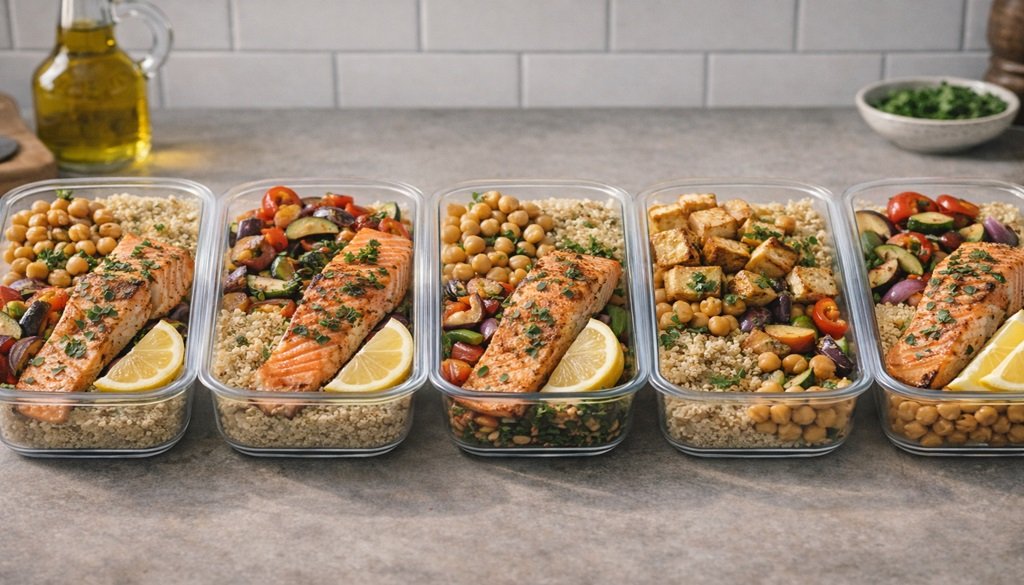
- Grain bowls using brown rice or quinoa with beans, roasted vegetables and a small portion of fish or chicken.
- Salads with leafy greens, beans, seeds and olive‑oil‑based dressing.pmc.ncbi.nlm.nih+1
Batch‑cooking beans, lentils and grains, prepping vegetables in advance, and relying on frozen vegetables are popular strategies to make Mediterranean meal plans easier and more affordable.mayoclinic+1
Sample 28‑day Mediterranean meal plan – global
Use a modular weekly plan and repeat with ingredient variations.
Breakfast options
- Greek‑style yoghurt with berries, oats and a sprinkle of nuts.
- Whole‑grain toast with hummus, tomato and cucumber slices.
- Oatmeal cooked with cinnamon, topped with apple and walnuts.
- Vegetable omelette with whole‑grain bread and fruit.
Lunch options
- Quinoa or brown rice bowl with chickpeas, roasted vegetables and tahini‑lemon dressing.
- Whole‑grain pasta with tomato, olive oil, garlic, spinach and a small portion of grated cheese.
- Lentil soup with mixed vegetables, served with whole‑grain bread.
- Large salad with mixed greens, beans, seeds and canned tuna or salmon in water.
Dinner options
- Baked salmon or mackerel with roasted potatoes and a side of mixed vegetables.
- Bean and vegetable chilli served over brown rice.
- Stuffed peppers with brown rice, lentils, herbs and olive oil.
- Whole‑wheat pita stuffed with falafel (baked), salad and yoghurt sauce.
Snacks
- Fresh fruit (apples, pears, oranges, grapes).
- A small handful of nuts (almonds, walnuts).
- Raw vegetable sticks with hummus.
Rotating these options over four weeks gives a flexible 28‑day Mediterranean meal plan for beginners worldwide, adaptable to different budgets and cultural preferences.mayoclinic+1
Expert Opinions and Evidence‑Based Quotes
Experts from cardiology, nutrition and public health repeatedly highlight the Mediterranean diet as one of the most evidence‑backed patterns for long‑term health.ahajournals+1
- A review in Circulation Research notes that evidence linking Mediterranean diet adherence to lower cardiovascular disease and mortality is “large, strong and consistent”, recommending it as a model for healthy dietary patterns.ahajournals
- Analyses of Mediterranean diet trials show reduced incidence of major cardiovascular events, improved lipid profiles and better blood pressure control compared with low‑fat diets.pmc.ncbi.nlm.nih+1
- The updated Mediterranean diet pyramid emphasises not just individual health, but environmental sustainability, encouraging local, seasonal plant foods and moderate animal products.pmc.ncbi.nlm.nih
- Major health organisations and hospital systems highlight the Mediterranean diet as a top choice for heart health, weight control and diabetes management.mayoclinic
These sources underline that a Mediterranean meal plan is one of the best‑studied and most adaptable ways of eating for both health and sustainability.pubmed.ncbi.nlm.nih+1
Frequently Asked Questions
What is a Mediterranean meal plan in simple terms?
A Mediterranean meal plan is a style of eating that focuses on vegetables, fruits, whole grains, beans, nuts, seeds and healthy oils, with moderate fish and minimal processed foods.pmc.ncbi.nlm.nih+1
Is the Mediterranean diet good for heart health and weight loss?
Yes, multiple trials and reviews show that Mediterranean‑style diets reduce heart disease risk and support gradual, sustainable weight loss when paired with appropriate portions and activity.pubmed.ncbi.nlm.nih+1
Can I follow a Mediterranean meal plan in Nigeria or Africa?
Yes, by using local staples—beans, grains, greens, fish—and reducing deep‑fried foods and heavy red meat, you can create Nigerian and African Mediterranean‑style meal plans.pmc.ncbi.nlm.nih+1
What foods should I limit on a Mediterranean meal plan?
Limit red and processed meats, sugary drinks, sweets, refined white bread and heavily processed snacks, focusing instead on whole, minimally processed foods.pmc.ncbi.nlm.nih+1
How do I start a Mediterranean meal plan on a budget?
Begin with affordable staples like beans, lentils, grains, seasonal vegetables and modest amounts of oil; use frozen vegetables and buy nuts in small quantities.pmc.ncbi.nlm.nih+1
Is wine required for the Mediterranean diet?
No, wine is optional and only for adults who already drink; health authorities do not recommend starting alcohol just for potential benefits, and many people follow Mediterranean diets without alcohol.pmc.ncbi.nlm.nih+1
Final Thoughts
A Mediterranean meal plan: a simple guide is not about copying European dishes exactly but about adopting a pattern; more plants, whole grains, healthy fats and less processed food,that can fit Nigerian, African and global kitchens. Small, consistent changes like adding one extra vegetable dish, swapping refined grains for whole grains and choosing beans or fish instead of red meat several times a week can steadily move any household towards a healthier Mediterranean‑style lifestyle.pubmed.ncbi.nlm.nih+2
This post is for education only, and is not intended to replace the sound nutritional guidance of your health care providers.
Related Reading
- Plant-Based Vegan Meal Plan for Healthy Living
- Best 1-Week Meal Plan For Over-40s Arthritis
- 5-Minute Healthy Nigerian Meals for Busy Professionals




Pingback: Keto Meal Plan: Simple Beginner Guide
Pingback: Intermittent Fasting Meal Plan for Beginners
Pingback: Best 1-Week Meal Plan For Over-40s Arthritis
Pingback: Top 20 Nigerian Home Remedies for Piles