
For many Nigerians, eating often happens around busy schedules—early mornings, long workdays, late dinners, and meals squeezed in between responsibilities. Over time, weight gain, fluctuating energy, or rising blood sugar levels may prompt questions about better ways to structure eating without extreme dieting or constant calorie counting.
An intermittent fasting meal plan for beginners offers a simple, flexible approach that focuses more on when you eat than on complicated food rules. For some people, it helps create routine, supports weight control, and improves metabolic health when done safely and paired with balanced meals. The appeal lies in simplicity, not restriction.
From clinical and lifestyle patterns, intermittent fasting is not a magic solution, and it does not suit everyone. Its benefits depend on food quality, consistency, and individual health needs. Research shows it can be as effective as traditional calorie restriction for weight loss and cardiometabolic health in adults with overweight or obesity—but only when approached thoughtfully.
This guide explains intermittent fasting for beginners in clear, practical terms, breaks down the science without jargon, and shares adaptable meal plan examples designed for Nigerians, wider African readers, and a global audience—so you can decide calmly whether this approach fits your lifestyle and health goals.
What is Intermittent Fasting?
Basic definition and how it works
Intermittent fasting (IF) is a pattern of eating that includes regular, structured periods without calories, followed by defined “eating windows”. Common approaches include:pmc.ncbi.nlm.nih
- 16:8 time‑restricted eating: 16 hours fasting and 8 hours eating each day (for example, eating from 12 pm to 8 pm).
- 14:10: 14 hours fasting and 10 hours eating, often easier for beginners.
- 5:2 diet: 5 days of normal eating and 2 non‑consecutive days of very low‑calorie intake (around 500–600 kcal).pmc.ncbi.nlm.nih+1
During fasting, the body shifts from using incoming food as energy to relying more on stored glycogen and fat; over time, this may improve insulin sensitivity, reduce fasting glucose and influence hormones related to appetite and metabolism.pmc.ncbi.nlm.nih+1
Evidence for benefits and limitations
A narrative review and several systematic reviews have found that intermittent fasting can promote weight loss, improve insulin sensitivity and reduce some cardiometabolic risk factors, often to a similar degree as continuous calorie restriction. A 2025 BMJ network meta‑analysis concluded that various intermittent fasting strategies produced clinically meaningful weight loss and improvements in body composition in adults with overweight and obesity.bmj+3
However, results vary between individuals, adherence can be challenging in the long term, and some studies are relatively short, so long‑term safety and sustainability data are still developing. Intermittent fasting is not appropriate for everyone and should be personalised rather than treated as a one‑size‑fits‑all solution.pmc.ncbi.nlm.nih+1
Is Intermittent Fasting Safe for Beginners?

Who should and should not fast
Most healthy adults can try moderate intermittent fasting approaches, but anyone with medical conditions should speak with a healthcare professional first. People who need special caution or medical supervision include those with:sph.umich+1
- Diabetes or on glucose‑lowering medications.
- Low blood pressure or significant cardiovascular disease. Read also: Dash diet
- History of eating disorders.
- Pregnancy or breastfeeding.
- Certain gastrointestinal or chronic illnesses.pmc.ncbi.nlm.nih+1
Children and adolescents generally should not use intermittent fasting for weight loss unless under specialist guidance because they are still growing and need consistent energy intake.pmc.ncbi.nlm.nih
Common side effects and how to handle them
When starting intermittent fasting, beginners often notice increased hunger, mild headaches, irritability, tiredness or sleep changes in the first days or weeks. These symptoms often improve as the body adjusts, especially if the eating window includes balanced meals with enough protein, fibre and healthy fats.sph.umich+1
Practical tips include drinking plenty of water, taking non‑caloric drinks like unsweetened tea or black coffee during the fast, breaking the fast with gentle, wholesome foods rather than very large or heavy meals, and increasing fasting hours gradually instead of jumping straight to strict schedules.tht.tangerine+1
Core Intermittent Fasting Methods for Beginners
16:8 and 14:10 time‑restricted eating
Time‑restricted eating is the easiest entry point for most beginners because the main change is shifting meal times rather than counting every calorie.sph.umich+1
- 16:8 example: Stop eating at 8 pm, fast overnight and in the morning, then eat between 12 pm and 8 pm.
- 14:10 example: Eat between 10 am and 8 pm, which can feel more comfortable initially.
People can choose windows that fit their daily routine: for example, a Nigerian worker might prefer 11 am–7 pm to align with work breaks and family dinners, while someone elsewhere might choose 10 am–6 pm.datelinehealthafrica+1
5:2 and other approaches
The 5:2 approach involves eating normally five days a week and having two non‑consecutive days where total intake is limited to about 500–600 kcal. Some people find this flexible, while others find very low‑calorie days difficult to sustain, so many beginners start with time‑restricted eating and only consider 5:2 later if it suits their lifestyle.pmc.ncbi.nlm.nih+1
Regardless of the pattern, success depends on choosing whole, nutrient‑dense foods during eating periods and avoiding compensating for the fasting by overeating ultra‑processed foods.pmc.ncbi.nlm.nih+1
What to Eat During Intermittent Fasting

Fasting window
During the fasting window, the goal is to avoid calories while staying hydrated and comfortable. Most protocols allow:nasaprimarycare+1
- Water (plain or sparkling, without sweeteners).
- Unsweetened tea (herbal or regular).
- Black coffee without sugar, cream or milk.
Sugary drinks, juices, alcohol and snacks provide calories and typically break the fast.pmc.ncbi.nlm.nih
Eating window
In the eating window, quality matters as much as quantity. Balanced meals built around vegetables, fruits, whole grains, legumes, lean proteins (fish, poultry, beans, lentils, eggs, moderate meat) and healthy fats (nuts, seeds, olive or similar oils) help stabilise blood sugar and keep hunger manageable.pmc.ncbi.nlm.nih+1
Patterns like the Mediterranean diet—rich in plants, whole grains and healthy fats—fit well with intermittent fasting and may enhance cardiometabolic benefits.mayoclinic+1
Intermittent Fasting Meal Plan for Nigerians
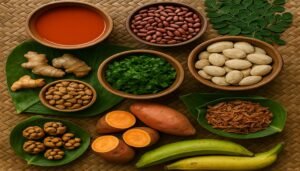
Intermittent fasting can be paired with Nigerian foods by focusing on less‑processed carbohydrate sources, plenty of vegetables, beans and fish, and moderate oil use.pmc.ncbi.nlm.nih+1
Choosing a Nigerian‑friendly fasting window
A common beginner option in Nigeria is a 16:8 schedule with an eating window from 12 pm to 8 pm; those who find mornings difficult without food may prefer 10 am to 6 pm. The key is to maintain roughly the same window daily so the body adapts.tht.tangerine+1
Sample 7‑day Nigerian intermittent fasting meal plan
This weekly pattern can be repeated for 3–4 weeks, with small variations in vegetables, protein and fruit. Assume a 16:8 schedule with fasting from 8 pm to 12 pm.
Fasting period (8 pm–12 pm)
- Water as desired.
- Black coffee or unsweetened tea in the morning if tolerated.
Day 1
- 12 pm: Brown/ofada rice with beans and tomato‑pepper stew rich in onions and a little vegetable oil; one orange.
- 4 pm: Pawpaw with a small handful of roasted groundnuts.
- 7 pm: Efo riro loaded with ugu or spinach, moderate grilled fish and a small portion of boiled yam.
Day 2
- 12 pm: Moin‑moin with a side salad (tomato, cucumber, carrot) and fruit.
- 4 pm: Unsweetened yoghurt with sliced banana.
- 7 pm: Jollof brown rice cooked with mixed vegetables and grilled chicken (skin removed).
Day 3
- 12 pm: Bean porridge with added vegetables (carrot, spinach) and a piece of boiled plantain.
- 4 pm: Apple or local equivalent plus a few cashews or groundnuts.
- 7 pm: Okra and tomato stew with fish and a small serving of whole‑grain swallow (e.g., sorghum‑based).
Day 4
- 12 pm: Boiled yam with egg and vegetable sauce (tomatoes, peppers, onions) and fruit.
- 4 pm: Carrot sticks and cucumbers with a little hummus (or bean dip).
- 7 pm: Vegetable pepper soup with fish or lean goat meat and a small side of potatoes.
Day 5
- 12 pm: Ofada rice with mixed vegetable stew and beans on the side.
- 4 pm: Fruit salad (watermelon, pineapple, pawpaw).
- 7 pm: Salad bowl with lettuce or local greens, cabbage, tomato, beans and tinned tuna in water, dressed with a small amount of oil.
Day 6
- 12 pm: Whole‑wheat bread with boiled egg and plenty of sliced tomatoes, cucumber and avocado.
- 4 pm: Unsweetened yoghurt and a few nuts.
- 7 pm: Stewed fish with a small portion of boiled plantain and sautéed vegetables.
Day 7
- 12 pm: Rice and beans with vegetable stew and small portion of grilled chicken.
- 4 pm: Fruit of choice.
- 7 pm: Light dinner of leftover vegetable soup or stew plus a small portion of whole‑grain swallow or brown rice.
This structure maintains a consistent fasting period while using familiar Nigerian foods in more balanced, less fried forms.pmc.ncbi.nlm.nih+1
Intermittent Fasting Meal Plan for Africa

Integrating IF with traditional African foods
Across Africa, many traditional diets already centre on grains, beans, root crops and leafy greens; intermittent fasting mainly requires organising these foods into specific time windows and moderating portion sizes.datelinehealthafrica+1
Sample 7‑day African intermittent fasting meal plan
Assume a 16:8 or 14:10 schedule with an eating window from 11 am to 7 pm.
Day 1
- 11 am: Millet porridge with groundnuts and fruit.
- 3 pm: Fruit (e.g., mango or orange).
- 6:30 pm: Ugali with sukuma wiki (collard greens) and grilled tilapia.
Day 2
- 11 am: Maize meal (pap) with beans and sautéed greens.
- 3 pm: Plain yoghurt or fermented milk.
- 6:30 pm: Rice and black‑eyed peas with tomato‑vegetable stew and small portion of chicken.
Day 3
- 11 am: Whole‑grain flatbread with eggs and tomato‑onion relish.
- 3 pm: Mixed nuts and seeds in a small portion.
- 6:30 pm: Sadza or pap with bean stew and mixed vegetables.
Day 4
- 11 am: Boiled sweet potato with beans and leafy greens.
- 3 pm: Fresh fruit.
- 6:30 pm: Lentil and vegetable soup with whole‑grain bread.
Day 5
- 11 am: Porridge made from sorghum or teff with nuts and fruit.
- 3 pm: Vegetable sticks.
- 6:30 pm: Couscous with chickpeas, vegetables and a drizzle of olive or sunflower oil.
Day 6
- 11 am: Leftover legumes and vegetables with a small whole‑grain portion (e.g., brown rice).
- 3 pm: Fruit or small yoghurt.
- 6:30 pm: Okra and tomato stew with fish and a small serving of fufu or plantain mash.
Day 7
- 11 am: Beans and vegetables with maize meal or millet flatbread.
- 3 pm: Nuts or seeds.
- 6:30 pm: Mixed vegetable stew with small portion of root crop (yam, cassava, or potato).
This approach respects African food culture while gently shaping it into a structure that supports intermittent fasting.
Intermittent Fasting Meal Plan for a Global Audience
Simple global beginner schedule
For many beginners around the world, a straightforward 16:8 schedule with an eating window from 11 am to 7 pm fits typical work and family routines. The same principles can be applied regardless of cuisine: prioritise whole foods, lean proteins, healthy fats and plenty of vegetables.sph.umich+1
Sample 7‑day global intermittent fasting meal plan
Day 1
- 11 am: Greek‑style yoghurt with berries, oats and walnuts.
- 3 pm: Apple with a small handful of almonds.
- 6:30 pm: Baked salmon with roasted potatoes and mixed vegetables.
Day 2
- 11 am: Oatmeal with banana and peanut butter.
- 3 pm: Carrot sticks with hummus.
- 6:30 pm: Lentil soup with whole‑grain bread and side salad.
Day 3
- 11 am: Whole‑grain toast with avocado, tomato and egg.
- 3 pm: Pear or seasonal fruit.
- 6:30 pm: Brown rice bowl with chickpeas, roasted vegetables and olive‑oil dressing.
Day 4
- 11 am: Smoothie made with fruit, plain yoghurt and oats.
- 3 pm: Handful of mixed nuts.
- 6:30 pm: Whole‑wheat pasta with tomato, olive oil, garlic, spinach and small amount of cheese.
Day 5
- 11 am: Cottage cheese or yoghurt with fruit and seeds.
- 3 pm: Vegetable sticks and hummus.
- 6:30 pm: Stir‑fried vegetables with tofu or chicken served with brown rice.
Day 6
- 11 am: Scrambled eggs with vegetables and whole‑grain toast.
- 3 pm: Fruit salad.
- 6:30 pm: Bean and vegetable chilli with whole‑grain bread or baked potato.
Day 7
- 11 am: Leftover grain bowl with beans and vegetables.
- 3 pm: Nuts and fruit.
- 6:30 pm: Stuffed peppers with rice, lentils and herbs, plus side salad.
This pattern showcases how diverse cuisines can fit within a simple intermittent fasting framework.
Expert Opinions and Evidence‑Based Quotes
Public‑health institutions and researchers emphasise that intermittent fasting is a tool that can work for some people, but it must be adapted to the individual.
- Harvard T.H. Chan School of Public Health notes that intermittent fasting may be effective for weight loss and cardiometabolic health and that different IF strategies appear broadly comparable to continuous calorie restriction when total calorie intake is similar.hsph.harvard
- A 2025 BMJ systematic review and network meta‑analysis reported that several intermittent fasting strategies, including time‑restricted eating and 5:2, significantly reduced body weight and improved some risk factors in adults with overweight or obesity.bmj
- Reviews in peer‑reviewed journals highlight potential benefits but also stress that long‑term adherence and safety data are still evolving, recommending that people choose approaches that fit their lives and medical conditions.pmc.ncbi.nlm.nih+1
- Beginner guides from academic and clinical sources emphasise starting gently, prioritising nutrient‑dense foods and seeking medical advice when in doubt.nasaprimarycare+1
Frequently Asked Questions
What is intermittent fasting in simple terms?
Intermittent fasting is an eating pattern that alternates between set periods of fasting and eating, usually each day or each week, rather than a specific list of foods.sph.umich+1
Does intermittent fasting help with weight loss?
Studies show that intermittent fasting can help many people lose weight and reduce body fat, often to a similar degree as traditional calorie‑restricted diets when total calories are comparable.pmc.ncbi.nlm.nih+2
Is intermittent fasting safe for women and older adults?
Many women and older adults can practice moderate intermittent fasting safely, but they should discuss it with a healthcare provider, especially if they have chronic illnesses, are on medications, or have a history of disordered eating.pmc.ncbi.nlm.nih+1
Can I do intermittent fasting if I live in Nigeria or elsewhere in Africa?
Yes, intermittent fasting can be combined with Nigerian or African foods by structuring mealtimes into fasting and eating windows and focusing eating periods on beans, grains, vegetables, fruits and moderate animal protein.tht.tangerine+2
What can I drink during intermittent fasting?
Water, unsweetened tea and black coffee are generally allowed; drinks with sugar, milk, cream or calories typically break the fast.nasaprimarycare+1
How long should I try intermittent fasting before judging results?
Many experts suggest giving a new intermittent fasting schedule at least several weeks while monitoring weight, energy and symptoms, and reassessing with a healthcare professional if there are concerns.sph.umich+1
Final Thoughts
An intermittent fasting meal plan for beginners works best when treated as a flexible framework, not a rigid rulebook. Whether you live in Nigeria, elsewhere in Africa or any part of the world, combining realistic fasting windows with wholesome, culturally familiar foods can make intermittent fasting both sustainable and supportive of long‑term health, provided it is done safely and with professional guidance where needed.hsph.harvard+3
This content is for general informational and educational purposes only and is not a substitute for professional medical advice, diagnosis, or treatment. Always seek the advice of your physician or another qualified health provider regarding a medical condition or before starting any new health, nutrition, or wellness program.
Related Reading
- Keto Meal Plan: Simple Beginner Guide
- Control Diabetes with Nigerian Food Choices
- A Nigerian Diet Plan for Chronic Kidney Disease